
Ask rediffGURU Reetika Sharma your insurance, mutual fund and personal finance-related questions.

From the 30-Sensex firms, Larsen & Toubro, Tech Mahindra, Tata Consultancy Services, Reliance Industries, Tata Steel, and Trent were among the biggest laggards. On the other hand, Eternal, ICICI Bank, Bajaj Finance, and Bharat Electronics were the gainers.

With average returns of 18 per cent over the past year, listed real estate investment trusts (Reits) have clearly outperformed both the Nifty Realty index and the Sensex. Over the same period, Nifty Realty fell 15.5 per cent, while the benchmark index was largely unchanged. Steady office leasing, the Securities and Exchange Board of India's (Sebi's) decision to reclassify Reits as equity instruments, and ongoing portfolio expansion have strengthened the sector's appeal.
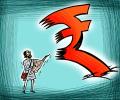
The rupee plunged 26 paise to an all-time low of 90.75 against the US dollar in intra-day trade on Monday, weighed down by uncertainty over an India-US trade deal and persistent foreign fund outflows.

'Geopolitics will be the most important driver of financial markets in 2025.'

Among Sensex firms, Tata Consultancy Services, Tech Mahindra, Axis Bank, Bajaj Finance, Eternal, Infosys, Kotak Mahindra Bank and Bajaj Finserv were the major gainers. However, Tata Steel, Adani Ports, Power Grid and Titan were among the laggards.

Overall economic activity continued to hold up in November with demand conditions remaining robust, thanks to strengthening urban demand, but manufacturing and rural demand showed some signs of deceleration even as services remained strong, according to an article on the State of the Economy written by Reserve Bank of India (RBI) officials in the central bank's December bulletin.
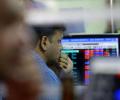
Among Sensex firms, Hindustan Unilever dropped the most by 3.20 per cent. UltraTech Cement, Kotak Mahindra Bank, Adani Ports, Titan, HDFC Bank and Axis Bank were also among the laggards. However, Bharti Airtel, ICICI Bank, Bharat Electronics and Sun Pharma were among the gainers.

In the 15 Union Budget presentation days of the Narendra Modi government since it came to power in 2014, the BSE benchmark Sensex has ended in negative territory eight times.

Among Sensex firms, Maruti, Axis Bank, Larsen & Toubro, ICICI Bank, Bharti Airtel, Infosys, Adani Ports and Hindustan Unilever were the laggards. However, Titan, State Bank of India, Eternal and Trent were among the major gainers.

In an eventful week ahead, stock markets may face volatile trends before the RBI's interest rate decision and the US inflation data announcements, as investors continue to assess the broader implications of US tariffs on global economy and inflation, analysts said. Investors fear that a full-blown trade war will impact global trade and economic growth, according to market experts.
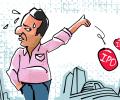
India's equity markets may have expanded rapidly, but initial public offerings (IPOs) are increasingly becoming exit vehicles for early investors rather than as engines for raising long-term capital, a shift that undermines the spirit of public markets, Chief Economic Advisor V Anantha Nageswaran warned on Monday at a CII event.

From the 30-Sensex firms, ITC tanked 9.69 per cent, following Bajaj Finance, Asian Paints, Bharat Electronics and ICICI Bank. In contrast, NTPC, Eternal, Mahindra & Mahindra, Larsen & Toubro and Power Grid were among the gainers.

The "huge mountain of debt" in developed economies and the risk of a possible unravelling is a matter of concern for India, Union Minister for Railways, Information & Broadcasting, Electronics & Information Technology Ashwini Vaishnaw said on Wednesday, pointing to the recent spike in Japanese bond yields.
From the Sensex firms, Mahindra & Mahindra, Maruti, Adani Ports, Bajaj Finserv, Titan, and HDFC Bank were among the major laggards. However, Hindustan Unilever, Trent, HCL Tech, Asian Paints, and Tata Steel were among the gainers.

Equity investors became richer by Rs 5.66 lakh crore as markets bounced back sharply on Tuesday following a recovery in global equities. The 30-share BSE Sensex jumped 1,276.66 points or 2.25 per cent to settle at 58,065.47 points. During the day, it zoomed 1,311.13 points or 2.30 per cent to 58,099.94 points. The market capitalisation of BSE-listed firms climbed Rs 566,318.84 crore to Rs 273,92,739.78 crore.

Asset financing firms are still witnessing subdued demand and meaningful recovery is likely only in FY16, the report said.

Finance Minister Nirmala Sitharaman's biggest challenge will be to find a new growth driver, particularly against the backdrop of a global economy ravaged by heightened uncertainty and fragmentation, financial markets on a precipice, and global commodity prices on a continued uptrend.

The milestone crowns a record year for the domestic primary market where IPO mobilisation is set to cross Rs 1.7 trillion.

India's third-largest telecom operator Vodafone Idea (Vi) has secured a 10-year breather on adjusted gross revenue (AGR) payments from the Department of Telecommunications (DoT). This is expected to ease pressure on its balance sheet and enable the company to raise bank debt for capital expenditure.
Securities and Exchange Board of India (Sebi) Chairman Tuhin Kanta Pandey on Thursday called for sharper disclosures in IPO (initial public offering) offer documents, particularly around risk factors, valuation rationale, objects of the issue, and utilisation of proceeds.
.jpg)
Government divestment reached record figures after the financial crisis, at the same time as promoters were required to bring down their stake in companies to 75 per cent or less.

Ravi Kaushik has sold 70,000 units of air filters through his start-up Airth and aims to sell 10 lakh units in the next five years.

India and the European Union are set to announce on January 27 the conclusion of negotiations and finalisation of a free trade agreement, which is aimed at boosting economic ties between the two regions amid disruptions in global trade due to US tariffs, an official said.

Silver prices extended their record-breaking rally for a sixth straight session on Monday, surging 6 per cent to touch a lifetime high of Rs 2,54,174 per kilogram in futures trade amid strong investor demand and bullish global trends. On the Multi Commodity Exchange (MCX), silver futures for March delivery surged Rs 14,387, or 6 per cent, to hit a new record of Rs 2,54,174 per kilogram.

Foreign investors pulled out Rs 34,993 crore (around $4 billion) from Indian equity markets in August, making it the sharpest sell-off in six months, weighed down by US tariffs on Indian exports and pricey domestic valuations. The withdrawal was nearly double the Rs 17,741 crore outflow recorded in July.

The QIP route was a big hit.
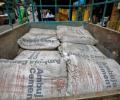
Investors have put money in Ambuja Cements shares as the cement major has moved to consolidate its operations. The Adani Group company has proposed to merge its subsidiaries ACC and Orient Cement into the parent entity.

India and the European Union (EU) on Tuesday announced the conclusion and finalisation of negotiations for the proposed free trade agreement (FTA).

Investors seeking higher returns at relatively higher risk should consider allocation to smallcap equity funds.

Restoring weighted tax deductions and adopting a petty patents regime can foster firm-level innovative activity critical for competitiveness, points out Nagesh Kumar.
Foreign investors offloaded Indian equities worth nearly Rs 21,000 crore in the first half of August, pressured by US-India trade tensions, lacklustre first-quarter corporate earnings, and a weakening rupee.

'An asset must generate income. Equities yield dividends, bonds pay coupons, deposits give interest, and real estate earns rent.' 'Gold, silver, and even Bitcoin produce no income, they merely store value. So, they should not be compared to productive assets.'

Foreign investors have pulled out nearly Rs 18,000 crore from Indian equities so far this month, weighed down by escalating US-India trade tensions, disappointing first-quarter corporate earnings, and a weakening Indian rupee. With this, the total outflow by Foreign Portfolio Investors (FPIs) in equities has reached Rs 1.13 lakh crore so far in 2025, according to data from the depositories.

Indian automakers are reviving legacy nameplates to leverage brand recall and stand out in a crowded market, as classic badges like Sierra, Safari, Baleno and Scorpio return to attract buyers.

'A breakout above 158,000 to 160,000 could trigger the next leg higher toward 165,000 to 170,000.'

'Retail portfolios were going nowhere even as headline indices moved higher, prompting investors to sell holdings and shift money to IPOs, attracted by listing-day gains.'
Stock markets will be driven by RBI's interest rate decision, tariff-related developments, global trends and trading activity of foreign investors in this holiday-shortened week, analysts said.

Mint Road's proposals on banks' M&A funding are cautious even as entrants root for more elbow room, and weigh business models.
From the 30-Sensex firms, Adani Ports, HCL Tech, Power Grid, Trent, Bharat Electronics and Bharti Airtel were among the biggest laggards. However, Tata Steel, Asian Paints, Hindustan Unilever, and Eternal were among the gainers.
 © 2026 Rediff.com - Advertise with us - Disclaimer - Privacy Policy - Sitemap - Feedback - About us - Terms of use - Grievances